

Why Is Temperature Monitoring Critical for Food Businesses?
Temperature monitoring is crucial for food businesses as it helps prevent foodborne illnesses by controlling the growth of bacteria that thrive in specific temperature ranges. If proper temperature control measures are not in place, harmful bacteria can multiply rapidly, posing a serious health risk to customers and exposing businesses to legal consequences.
Understanding the Danger Zone
The danger zone for bacterial growth is between 5°C and 60°C. Within this temperature range, pathogens such as Salmonella, E. coli, and Listeria can double their population every 20 minutes. This means that a single bacterium has the potential to become millions within a matter of hours, turning safe food into a health hazard even before any visible signs of spoilage are present.
The Importance of Temperature Control
To effectively stop bacterial growth, it is essential to maintain temperatures either at or below 5°C or at or above 60°C. Cold storage below 5°C slows down bacterial metabolism to near-dormant levels, while heat above 60°C denatures proteins that are vital for bacterial survival. It is critical to keep ready-to-eat hazardous foods outside the danger zone at all times in order to ensure consumer safety.
Managing Temporary Temperature Changes
During food preparation, there may be instances when food temporarily enters the danger zone. The 2 hour/4 hour guide provides a crucial framework for managing such situations:
- Less than 2 hours: Food can be refrigerated and used later
- Between 2-4 hours: Food must be consumed immediately
- More than 4 hours: Food must be discarded without exception
This guideline acknowledges that brief temperature fluctuations can occur during food preparation, but it also emphasizes the importance of strict time limits in preventing dangerous bacterial buildup.
The Role of Regulatory Compliance
Documented temperature monitoring is essential for regulatory compliance. Health inspectors require evidence that food businesses consistently maintain proper temperatures throughout the processes of receiving, storing, preparing, and serving food. Having a comprehensive checklist for temperature monitoring equipment becomes crucial in order to:
- Demonstrate due diligence during health inspections
- Provide proof of compliance with HACCP (Hazard Analysis Critical Control Points) standards
- Safeguard against liability claims following outbreaks of foodborne illnesses
- Avoid costly fines, temporary closures, or permanent revocation of licenses
Food safety regulations specify certain temperature requirements because statistics have shown their effectiveness. According to estimates from the CDC (Centers for Disease Control and Prevention), implementing proper temperature control measures could potentially prevent around 40% of foodborne illness outbreaks associated with food service establishments.
The Impact of Temperature Monitoring Equipment
By using temperature monitoring equipment, food safety practices can shift from being based on assumptions to being backed by measurable data. This objective approach not only enhances accountability within the organization but also fosters trust among customers who rely on safe and hygienic dining experiences.
In conclusion, maintaining strict control over temperatures throughout all stages of food handling is vital in ensuring public health and safeguarding business interests.

What Are the Essential Thermometers Every Food Business Should Have?
Every food business needs accurate thermometers with ±1°C accuracy to measure internal food temperature reliably. This precision level ensures you can confidently determine whether foods are within safe temperature ranges, as even a 2-degree variance can mean the difference between safe and potentially hazardous conditions.
Digital Probe Thermometers
Digital probe thermometers offer the fastest and most accurate readings for checking internal food temperatures. These devices feature a metal probe that inserts directly into food, displaying temperature readings within seconds on a digital screen. They work exceptionally well for:
- Checking the core temperature of thick cuts of meat
- Verifying reheated foods have reached safe temperatures
- Testing cold storage items during receiving procedures
- Measuring temperatures in multiple locations within large food batches
The instant-read capability makes digital probes ideal for busy kitchen environments where speed matters. Many models include features like hold functions, min/max memory, and waterproof designs that withstand commercial kitchen conditions.
Dial Thermometers
Dial thermometers use a bimetallic coil mechanism to display temperature on an analog face. While they typically take 15-20 seconds longer to stabilize than digital versions, they remain valuable backup tools that don’t require batteries. These thermometers suit situations where:
- Power sources are unavailable or unreliable
- Budget constraints limit digital equipment purchases
- Staff prefer familiar analog interfaces
- Equipment needs to withstand extreme temperature ranges
Dial thermometers with stems at least 12cm long allow proper insertion into thick foods without hand contact near hot surfaces.
Infrared Thermometers
Infrared (non-contact) thermometers measure surface temperatures by detecting thermal radiation. They provide quick surface readings for:
- Monitoring grill and cooking surface temperatures
- Checking food temperatures in display cases
- Scanning multiple items during receiving inspections
- Verifying hot holding equipment maintains proper heat
These thermometers cannot measure internal temperatures accurately, so they complement rather than replace probe thermometers. They excel at preliminary checks and situations where inserting a probe would damage food presentation.
When to Use Each Type
During food preparation, use digital or dial probe thermometers to verify internal temperatures. However, in certain scenarios, infrared thermometers can be beneficial for checking hot holding temperature of food without direct contact, making them an essential part of your kitchen toolkit as well.
How Do Digital Temperature Monitoring Systems Enhance Food Safety?
Digital monitoring systems eliminate the gaps that manual temperature checks create by providing 24/7 surveillance of critical storage areas. These automated solutions track refrigerator and freezer temperatures continuously, capturing data every few minutes rather than relying on staff to record readings twice daily. This constant vigilance catches temperature fluctuations immediately, whether caused by equipment malfunction, power outages, or doors left ajar during busy service periods.
1. Continuous Tracking Prevents Costly Food Loss
Continuous tracking prevents costly food loss by detecting problems before entire inventories spoil. A refrigerator that gradually warms from 4°C to 8°C overnight might go unnoticed until morning checks, by which time hundreds of dollars in perishable ingredients have entered the danger zone. Digital systems identify these temperature drifts within minutes, allowing staff to transfer products to backup units or address mechanical issues before contamination occurs.
2. Remote Sensors Transform Emergency Response
Remote sensors transform how food businesses respond to temperature emergencies. Modern systems send instant alerts via text message, email, or mobile app notifications when temperatures exceed safe thresholds. Kitchen managers receive warnings even when off-site, enabling them to dispatch staff for immediate corrective action. This capability proves invaluable for businesses operating outside standard hours or managing multiple locations from a central office.
3. Advanced Alert Functionality for Enhanced Operations
The real-time alert functionality extends beyond simple threshold warnings. Advanced systems can:
- Notify different team members based on severity levels
- Escalate alerts if initial warnings go unacknowledged
- Track door opening frequency to identify operational inefficiencies
- Monitor ambient room temperatures in preparation areas
4. Streamlined Compliance with HACCP Integration
Integration with HACCP compliance systems streamlines regulatory documentation requirements. Digital monitoring platforms automatically generate temperature logs that satisfy health department inspection standards, eliminating handwritten charts that staff often forget to complete during rush periods. These systems timestamp every reading, creating tamper-proof records that demonstrate consistent food safety practices.
5. Accessible Data for Audits and Investigations
Cloud-based storage ensures temperature data remains accessible for years, meeting audit requirements without physical file storage. When inspectors request historical records, managers can instantly pull reports showing temperature trends across specific date ranges. This digital documentation proves particularly valuable during foodborne illness investigations, where businesses must demonstrate proper temperature control protocols were followed.
6. Comprehensive Visibility into Cold Chain Infrastructure
Many platforms include customizable dashboards that display multiple unit temperatures simultaneously, allowing managers to spot patterns across their entire cold chain infrastructure. This bird’s-eye view reveals which equipment consistently
Why Are Wireless Hand Probes Important for Real-Time Temperature Checks?
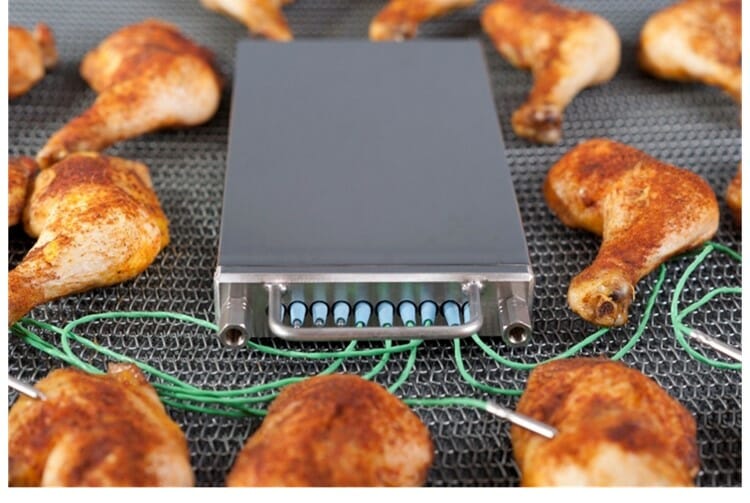
Wireless hand probes deliver instant temperature readings during the busiest moments of food service. These devices eliminate the need for staff to walk back and forth between cooking stations and fixed thermometers, allowing kitchen teams to verify cooked ingredient temperature without disrupting workflow. A chef can check the internal temperature of grilled chicken, seared fish, or reheated sauces in seconds while remaining at their station.
Speed Matters
Speed matters when multiple dishes require temperature verification simultaneously. Traditional wired probes create physical barriers in cramped kitchen spaces, while wireless models provide freedom of movement across prep areas, cooking lines, and holding stations. Staff can conduct real-time checks on ten different items in the time it would take to verify three with conventional equipment.
Precision in Critical Cooking Moments
Wireless probes measure cooked foods’ temperatures with ±1°C accuracy before plates leave the kitchen. This precision ensures proteins reach safe minimum internal temperatures—75°C for poultry, 63°C for whole cuts of beef—while preventing overcooking that degrades food quality. The immediate digital display removes guesswork from temperature assessment, particularly valuable when training new kitchen staff or managing high-volume service periods.
These devices excel at verifying temperatures in hard-to-reach areas of thick cuts or layered dishes. The probe tip reaches the geometric center of roasts, casseroles, and stuffed items where cold spots typically hide. Staff can test multiple points within a single dish to confirm uniform heating throughout.
Minimizing Human Error
Manual temperature logging creates opportunities for mistakes—misread dial thermometers, transposed numbers, or forgotten checks during rush periods. Wireless probes with built-in data transmission automatically record each measurement, timestamp, and location within the Temperature Monitoring Equipment Checklist: What Every Food Business Should Have. This automation removes the burden of manual documentation while creating verifiable records for health inspections.
The technology prevents common errors like:
- Recording temperatures before probes stabilize
- Estimating readings from unclear analog displays
- Forgetting to sanitize probes between different food items
- Missing temperature checks during understaffed shifts
Many wireless systems alert users when readings fall outside safe parameters, prompting immediate corrective action rather than discovering problems hours later during routine log
What Automated Tools Help Maintain Compliance and Records?
Automated Temperature Monitoring Systems
Automated temperature monitoring systems eliminate the burden of manual paperwork while creating reliable documentation trails. These digital platforms connect directly to temperature sensors throughout your facility, automatically recording readings at predetermined intervals without requiring staff intervention. The system captures data from refrigerators, freezers, hot holding units, and other critical control points, storing everything in a centralized database accessible for review at any time.
Automated Checklists
Automated checklists transform HACCP compliance from a paper-based headache into a streamlined digital process. Instead of staff members walking around with clipboards and pens, the system generates pre-programmed checklists that prompt employees to complete specific tasks at designated times. When a temperature reading falls outside acceptable parameters, the system immediately flags the deviation and can send alerts to management phones or email addresses. This instant notification capability prevents small issues from becoming major food safety incidents.
Historical Record-Keeping
The historical record-keeping function proves invaluable during health inspections and internal audits. Digital systems maintain years of temperature data in searchable formats, allowing you to pull up specific dates, times, or equipment readings within seconds. Inspectors can review months of compliance documentation without sorting through filing cabinets or binders. The timestamp feature on each entry provides irrefutable proof of when checks occurred and who performed them.
Staff Accountability
Staff accountability improves dramatically with automated data collection systems. Each employee logs into the system using unique credentials, creating an audit trail that shows exactly who completed which tasks and when. Managers can identify patterns such as missed checks, delayed responses to alerts, or consistent compliance from particular team members. This visibility helps with training decisions and performance evaluations.
Integration for Comprehensive Management
The integration between temperature sensors and HACCP compliance software creates a comprehensive food safety management system. When temperatures deviate from safe ranges, the system doesn’t just record the incident—it can trigger corrective action protocols, require staff to document their response, and escalate to supervisors if problems persist. This closed-loop approach ensures no food safety issue goes unaddressed.
Reducing Data Falsification Risk
Digital record systems also reduce the risk of falsified data. Manual temperature logs can be filled out incorrectly, backdated, or completed without actual measurements being taken. Automated systems capture real sensor data with accurate timestamps, eliminating the possibility of fabricated entries that could mask genuine safety problems.
How Can Equipment Aid Rapid Cooling to Meet Safety Standards?
Rapid cooling equipment prevents bacterial multiplication by moving food through the danger zone as quickly as possible. Food safety standards require cooling cooked foods from 60°C to 21°C within 2 hours, then down to ≤5°C within an additional 4 hours—a critical timeline that protects against pathogens like Clostridium perfringens and Bacillus cereus.
Standard refrigeration alone cannot meet these cooling time requirements. A large pot of soup placed directly into a walk-in cooler may take 8-12 hours to reach safe temperatures, creating ideal conditions for bacterial growth in the warm center of the food mass.
Essential Cooling Techniques and Equipment
Blast chillers represent the gold standard for rapid cooling in commercial kitchens. These specialized units circulate cold air at high velocity, reducing food temperature at rates up to 90 times faster than conventional refrigeration. A blast chiller can cool a full-size pan of cooked chicken from 60°C to 5°C in under 90 minutes.
Ice paddle stirrers provide an effective solution for liquid-based foods like soups, sauces, and stocks. These hollow paddles fill with ice water and circulate through hot liquids, cooling from the inside out while preventing skin formation on the surface.
Ice baths offer a low-tech but highly effective cooling method. Placing food containers in larger vessels filled with ice and water creates rapid heat transfer. Stirring the food every 10-15 minutes accelerates the cooling process by distributing cold temperatures evenly throughout.
Optimizing Container Selection
Shallow stainless steel pans (no deeper than 5cm) dramatically increase cooling efficiency by maximizing surface area exposure. Dividing large batches into multiple smaller containers creates more cooling surface area—a 10-liter pot of rice cools 3-4 times faster when split into four 2.5-liter containers.
Perforated inserts allow cold air or ice water to circulate around and beneath food, eliminating hot spots. Vented lids permit steam to escape while protecting food from contamination during the cooling process.
What Tools Are Necessary for Safe Transport and Display of Hot Foods?
Insulated transport bags and hot packs keep foods at or above 60°C during delivery and temporary display, preventing bacterial growth in the danger zone. These tools create a thermal barrier that maintains consistent heat levels, protecting food safety from kitchen to customer.
Insulated Transport Bags: The First Line of Defense
Quality insulated transport bags feature multiple layers of thermal material that trap heat inside. Commercial-grade bags typically include:
- Thick foam insulation with reflective inner linings
- Reinforced seams to prevent heat escape
- Water-resistant exteriors for easy cleaning
- Rigid bases to prevent food spillage during transport
Food businesses should select bags sized appropriately for their delivery volumes. Oversized bags allow excess air circulation, causing faster temperature drops. Bags should fit food containers snugly with minimal empty space.
Hot Packs and Heating Elements
Hot packs supplement insulated bags by actively maintaining temperature during extended transport times. Reusable gel packs heated to 70-80°C provide several hours of consistent warmth. Electric heating elements powered by vehicle adapters offer continuous temperature maintenance for longer routes.
Position hot packs strategically around food containers rather than directly underneath. This creates even heat distribution and prevents hot spots that could continue cooking food. Some delivery services use heated holding cabinets mounted in vehicles, which maintain precise temperatures through electronic controls.
Monitoring Temperature During Transport
Temperature monitoring equipment remains essential even with proper insulation. Wireless probe thermometers placed inside transport containers send real-time alerts if temperatures drop below 60°C. This allows drivers to take corrective action before food enters the danger zone.
Pre-heating insulated bags before loading hot food extends safe holding times. Running hot water over the interior or placing heated packs inside for 10-15 minutes creates a warm environment that reduces initial temperature shock.
Display Equipment for Hot Food Service
Hot holding cabinets, chafing dishes, and heat lamps maintain safe temperatures during buffet service or temporary display. These units should include built-in thermometers visible to staff for constant monitoring. Steam tables with water baths provide gentle, even heating that prevents food from drying out while maintaining safety standards.
Regular temperature checks every 30
Why Is Regular Maintenance and Calibration Important for Temperature Equipment?
Temperature monitoring equipment loses accuracy over time, making regular maintenance and calibration essential for reliable food safety measurements. Without proper upkeep, thermometers and probes can drift from their true readings, potentially allowing contaminated food to pass safety checks undetected.
How Often Should You Calibrate Your Thermometers?
Calibration devices should be used to verify thermometer accuracy at least once per month, or more frequently in high-volume operations. Most digital thermometers require calibration using either the ice point method (0°C) or boiling point method (100°C). The ice point method involves submerging the probe in an ice-water slush and adjusting the reading to 0°C if it varies beyond ±1°C.
Calibration becomes critical after:
- Dropping or physically damaging equipment
- Exposing probes to extreme temperature changes
- Extended periods of storage without use
- Any reading that seems inconsistent with expected results
What Cleaning Protocols Prevent Cross-Contamination?
Sanitation supplies must be readily available wherever temperature probes are used. Each probe requires thorough cleaning and sanitizing between different food items to prevent cross-contamination. A probe used to check raw chicken, for example, can transfer harmful bacteria to cooked foods if not properly sanitized.
The standard cleaning protocol includes:
- Washing the probe with hot, soapy water
- Rinsing thoroughly with clean water
- Sanitizing with an approved food-safe sanitizer
- Air-drying or wiping with a clean, disposable towel
Some operations use disposable probe covers for single-use applications, though these still require the probe itself to be sanitized regularly.
How Do You Schedule Preventive Maintenance?
Creating a maintenance schedule prevents equipment failures during critical service periods. Digital monitoring systems need battery replacements, sensor checks, and software updates to maintain thermometer accuracy and system reliability.
A comprehensive maintenance log should track:
- Monthly calibration results with date and staff initials
- Battery replacement dates for wireless devices
- Sensor cleaning and inspection records
- Any repairs or replacements performed
- Next scheduled maintenance date
Click here for more Traceability Software Food Safety Teams Use to Track Contamination Risks in Seconds